

KRS Pauses Its Editorial Philosophy
Our Editorial Philosophy asserts that we avoid prophecy and politics
to emphasize profitability for residential real estate investors and landlords.
This month we’ll break with tradition and address all three!
Prophecy
Inflation will not abate, decrease, diminish before year-end 2026.
In support of this assertion, here’s my synthesis of prevailing analyst views that prices will not normalize immediately after the Strait of Hormuz fully reopens … a date that remains elusive at best. Once that date is set, close-to-normal operations may resume within 1–2 months depending on the condition of the waterway.
Most energy, shipping, and commodities analysts appear to expect a multi-stage stabilization process.
If reopening is credible and sustained oil prices fall materially within days, a simplified timeline looks roughly like this:
Stages | Stabilization Window |
Oil futures calm | Days to 2 weeks |
Tanker traffic resumes | 2–8 weeks |
Freight insurance normalizes | 1–3 months |
Retail fuel prices settle | 1–4 months |
Broader inflation effects fade | 2–3 quarters |
Strategic reserve rebuilding | 1–3 years |
That said, analysts repeatedly emphasize that markets would require evidence the reopening is durable. A temporary reopening followed by renewed conflict would keep risk premiums elevated.
Given the “best guess” scenarios outlined above, it is clear to me that we will not enjoy any appreciable break this year in the net effects of inflation as it affects us as landlords and investors.
Profitability
Successful property management is based on simple math:
Add value to your assets, subtract unnecessary expenses.
KRS Holdings
Effect on Overhead & Cash Flow
The current major driver of inflation is oil prices. For residential landlords and investors (you & me), when oil prices move the negative impact is intense as oil is a foundational component in many materials and processes that drive short and long-term residential real estate costs. Click Here for some prime examples of petroleum-based products.
Until oil pricing stabilizes, we can anticipate continued negative impact as it directly affects:
- Maintenance Costs
- Material Pricing
- Operating Expenses
- Cash Flow
- Long-term Asset Value
- Borrowing Costs
The Need to Refinance: It’s no secret … About five years ago — in 2021 during the pandemic-era low-rate environment — U.S. residential mortgage rates were near historic lows. Today they are roughly double those levels. Here’s a view of the refi landscape today.
Period | 30 Year Fixed | 15 Year Fixed | 5 Year ARM |
2021 Average | 3% | 2.3% | 2.6% |
May 2026 | 6.36% | 5.7% | 6.5% |
Politics
Kevin Warsh and the new Fed

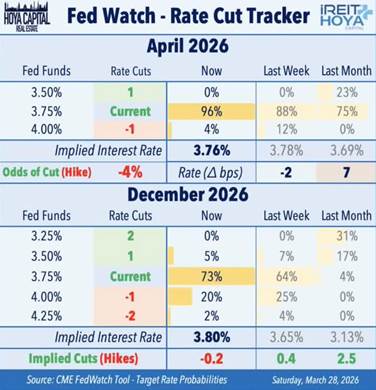
Likely Fed Rate Expectations for Balance of This Year:
President Donald Trump selected Kevin Warsh to succeed Jerome Powell as Fed Chairman. Warsh is generally viewed as somewhat more market-oriented and perhaps more open-to rate cuts. That said, I’m inclined to agree with the following Fed Watch-Rate Tracker assessment … no rate cuts for the balance of this year.
Regulatory Impacts:
Two new bills have been passed by both houses of the legislature and signed into law by Governor Spanberger. Both exhibit the potential for significant negative effects for residential landlords.
SB48
The Virginia Residential Landlord and Tenant Act; landlord remedies; noncompliance with rental agreement. The bill’s effective date is July 1, 2026. Click Here … for more detail and impact on landlords.
HB848
Virginia Residential Landlord and Tenant Act; material noncompliance by landlord; rent escrow; relief. The bill has a delayed effective date of January 1, 2027. Click Here for more details.
Short/Mid-Term Strategies for Residential Real Estate Landlords
Here at KRS Holdings, my intent is to shift from a “growth and expansion” mindset to a “capital preservation and operationally flexible” approach for at least the next 6–18 months. Here are 9 elements to diligently monitor and react to as appropriate.
1. Preserve Liquidity First
2. Lock In Debt — Avoid Floating Exposure
3. Expect Slower Appreciation
4. Focus on Workforce Housing
5. Control Operating Costs Aggressively
6. Screen Tenants More Conservatively
7. Be Cautious About Large Expansions
8. Watch the New Fed Chairman Carefully
9. Prepare for Opportunity
The current environment appears more do to oil price induced inflationary shock … rather than a normal business-cycle slowdown. To me, that means conservative landlords with liquidity will prevail over those punished by overleveraged speculation.
Whether you’re managing one property or a growing portfolio, staying ahead of cost trends is critical. We’re here to support you in evaluating your property performance, managing expenses, optimizing returns … and deliver proven successful property management.
Give us a call or drop an email. We’ll respond promptly
to help you make informed, confident decisions …
plus maximize your rental property return on investment.