


Reading Time: 3.6 minutes
SINGLE-FAMILY HOMES - LANDLORDS & INVESTORS
We Are About to “Cut to the Chase”, Skip
Unnecessary Details and Get Straight to the Key Point!
"It's the economy, stupid" is a catchphrase that means the primary concern of American voters is the state of the American economy, and how it affects their personal finances.
For purposes of this piece, let me rephrase … “It’s the price of oil, _____”
The current and anticipated price of oil is the fundamental driver of today’s inflation. Rising costs of both consumer and commercial goods and services are driven by higher transportation costs as well as interruptions in supply chains. Until oil prices stabilize/significantly reduce in cost, don’t expect lower interest rates and other cost savings.
In contrast, the U.S. economy in late 2026 remains resilient and expanding.
- Real GDP expanded by 1.5% in Q2.
- Consumer spending continues to support steady activity.
- Unemployment hovers between 4.4% and 4.6%.
- Employers added a stronger-than-expected 162,000 jobs in August, plus
- Wages increased 3.1% year over year.
- The employment market sits in a stable low-hire, low-fire balance
Bottom line … the driver of inflation and fed rate hikes is the price of oil.

With that conclusion in mind, I will address my expectations for smaller single-family and scattered-site investors over the period September 2026 through March 2028. Included in that discussion:
- My guiding principles for decision making
- The likely landscape of financing, operating costs, rents, asset appreciation and renter pools.
- Checklists for Success for both current investors and first time/expanding portfolio landlords.
Guiding Principles
- Anticipated oil prices …assuming traffic through the Strait of Hormuz returns to normal levels.
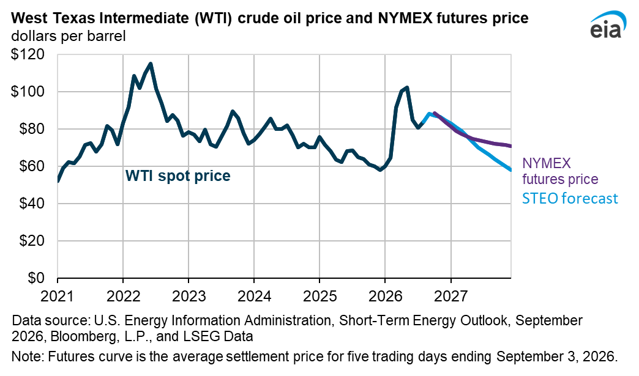
- This cycle is a “higher for longer” environment …likely to extend through 2027.
- The Federal Reserve new median projection places the federal funds rate at 4.1% at both year-end 2026 and year-end 2027. That implies another increase is more likely than a reduction and potentially delaying meaningful relief until 2028.
Financing, Operating Costs, Rents, Asset Appreciation & Renter Pools.
Investor mortgage rates | Generally, 7%–8%+, depending on leverage, property, borrower and lender |
Owner-occupied mortgages: | Mostly mid-to-upper 6% range, with periods above 7% |
Home-price appreciation: | Approximately flat to 2% nationally; highly market-specific |
Rents: | Positive but modest growth; generally, 1%–4%, not another rent boom |
Sales volume: | Depressed but gradually improving as investors accept the new rate environment |
Distress: | Increasing selectively among overleveraged owners, not a broad foreclosure crisis |
Operating expenses: | Insurance, taxes, labor and materials continue rising faster than many rents |
Cap rates: | Remain elevated, although small residential properties will adjust unevenly |
Best opportunities: | Assumable debt, seller financing, tired landlords, operationally weak portfolios and cash-flow acquisitions |
Fannie Mae’s September forecast supports this general picture: it projects the 30-year mortgage rate averaging approximately 6.7% in 2027, home sales increasing only modestly, and home-price appreciation slowing to approximately 1%. Fannie Mae housing forecast

Checklist for Success – Existing Investors – Next 18 Months
1. Financing remains the dominant investment constraint
Small investors will continue discovering that a property can be reasonably priced but still fail to produce acceptable cash flow.
2. Property values will stagnate more than collapse
I do not expect a nationwide single-family housing crash in the base case. There are too many owners with low fixed-rate debt, and most are not forced to sell.
3. Existing low-rate debt becomes increasingly valuable
A rental property with 3%–4% fixed-rate financing may be worth considerably more to its current owner than to a buyer who must finance it at 7%–8%.
4. Rent demand remains supported, but rent growth will not automatically accelerate
Higher mortgage rates make homeownership less affordable, keeping many households in rentals longer. That supports occupancy for well-maintained single-family rentals.
5. Employment matters more than rates alone
The current labor market does not look recessionary yet. August added 162,000 jobs, unemployment remained 4.1%, and wages increased 3.1% year-over-year.
6. Oil is the major contributing factor to inflation
7. Operating expenses remain the quiet threat
For many small investors, the real problem will not be an additional quarter-point Fed increase. It will be expense inflation occurring simultaneously with restrained rent growth.
8. Overleveraged investors gradually become motivated sellers
I do not expect a wave of distress comparable to 2008. I do expect a growing stream of individual opportunities.

Checklist for Success – First-time/Expanding Portfolio Landlords
1. Buy from tired landlords, not polished listings
2. Negotiate the financing, not merely the price
3. Focus on going-in cash flow; the investment must work NOW!
4. Acquire properties that appeal to both renters and future homeowners
The best downside protection is a property with two exit markets.
5. Consolidate scattered portfolios
A small owner with 15 houses spread across multiple markets may be struggling with maintenance, leasing and oversight.
6. Preserve liquidity – Cash is King
Cash will have unusually high strategic value.
Higher rates have created a market in which patient, liquid and operationally capable investors can acquire properties from owners who were dependent on cheap debt, rapid appreciation or aggressive rent increases.
Conclusions
Regular readers of the Newsletter, clients and friends … I believe will be unanimous in saying that I never claim, “I told you so”! That said, I urge you to revisit or read for the first time the articles from our May and June issues this year. It will offer a perception of the accuracy of my typically avoided topics … Prophecy and Politics.
Whether you’re managing one property or a growing portfolio, staying ahead of cost trends is critical. We’re here to support you in evaluating your property performance, managing expenses, optimizing returns … and deliver proven successful property management.
Give us a call or drop an email. We’ll respond promptly
to help you make informed, confident decisions …
plus maximize your rental property return on investment.